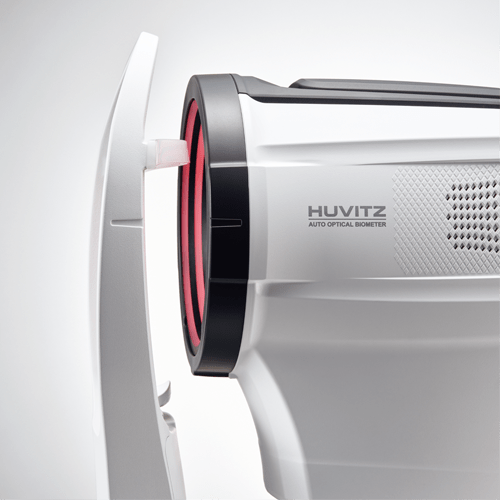
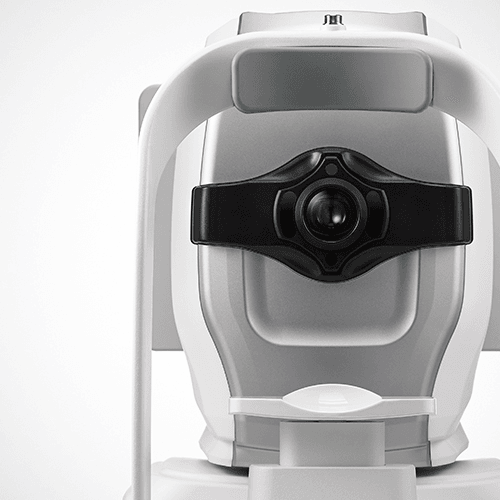
HVF-100
Perimeter
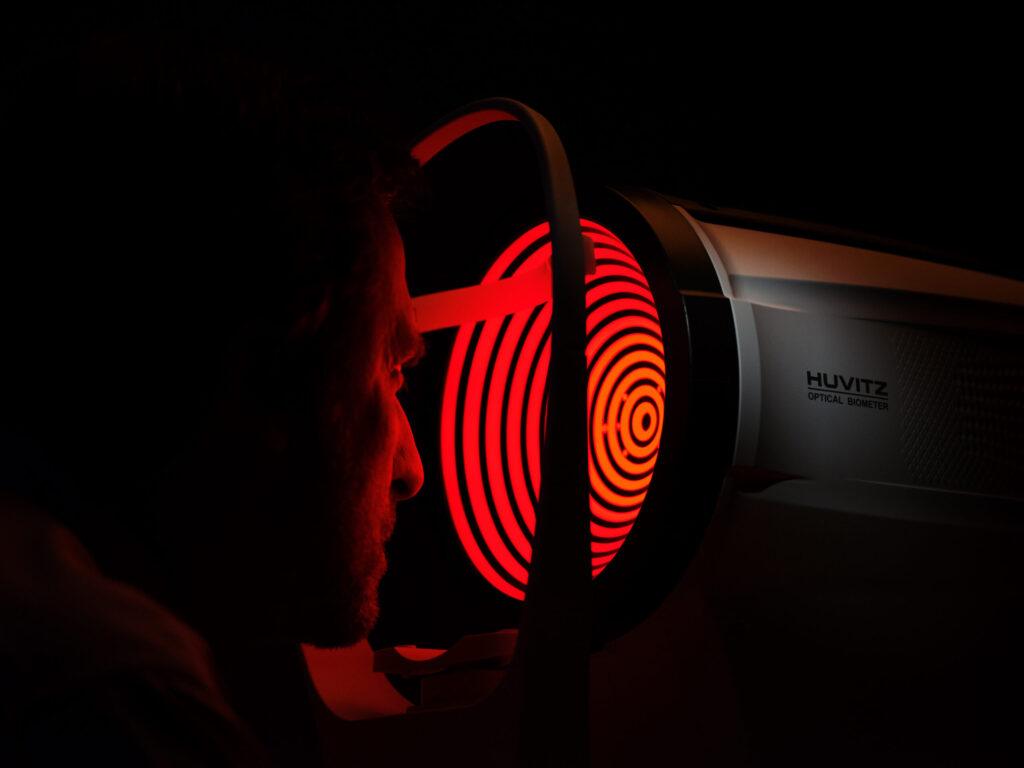
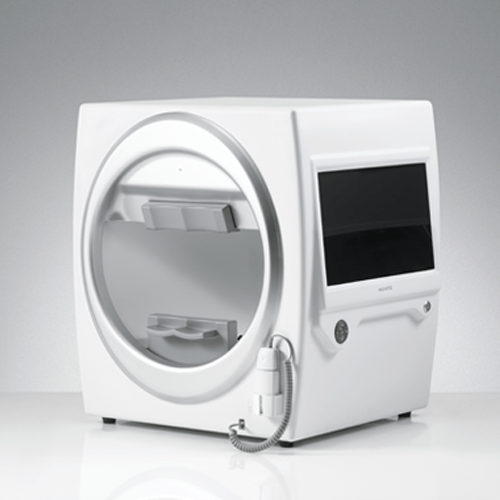
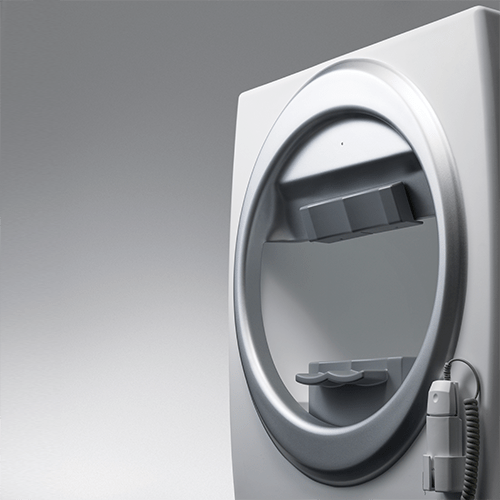
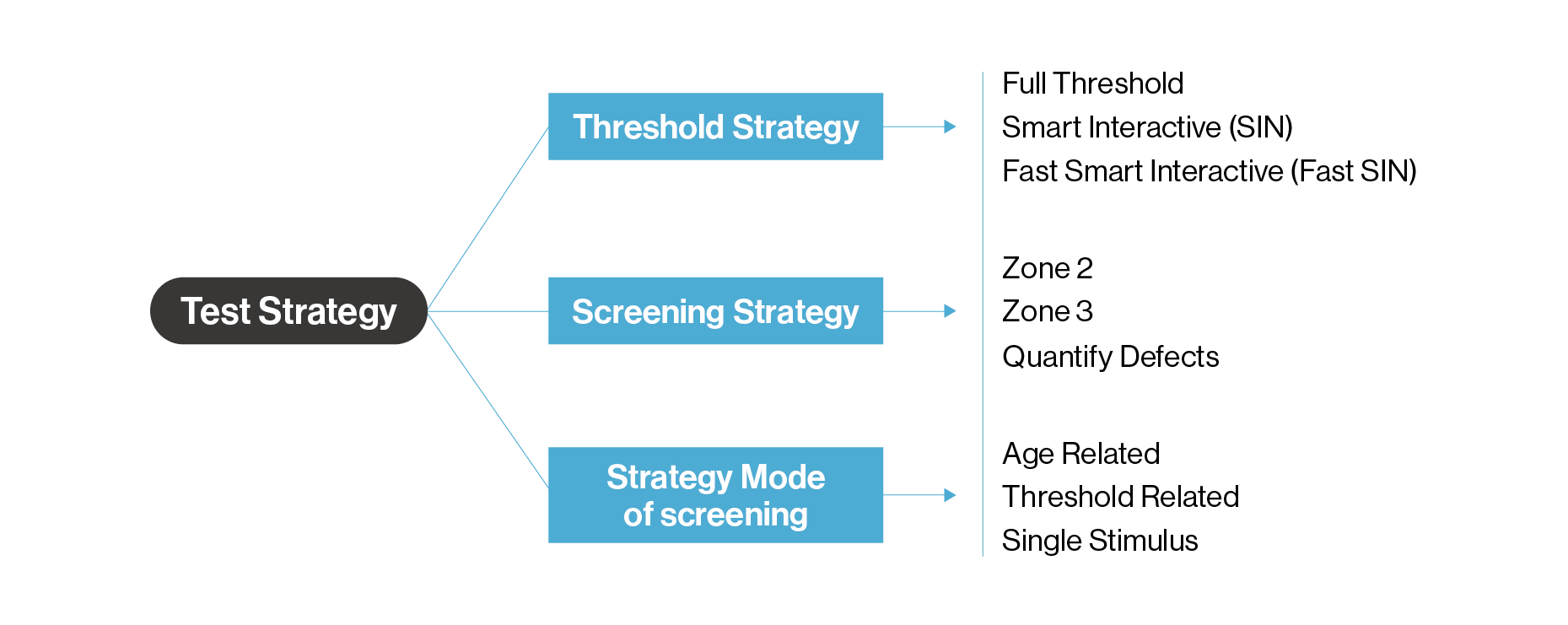
Perimeter that evaluates the visual field through various sizes and brightness of visual stimuli
- Precise measurement
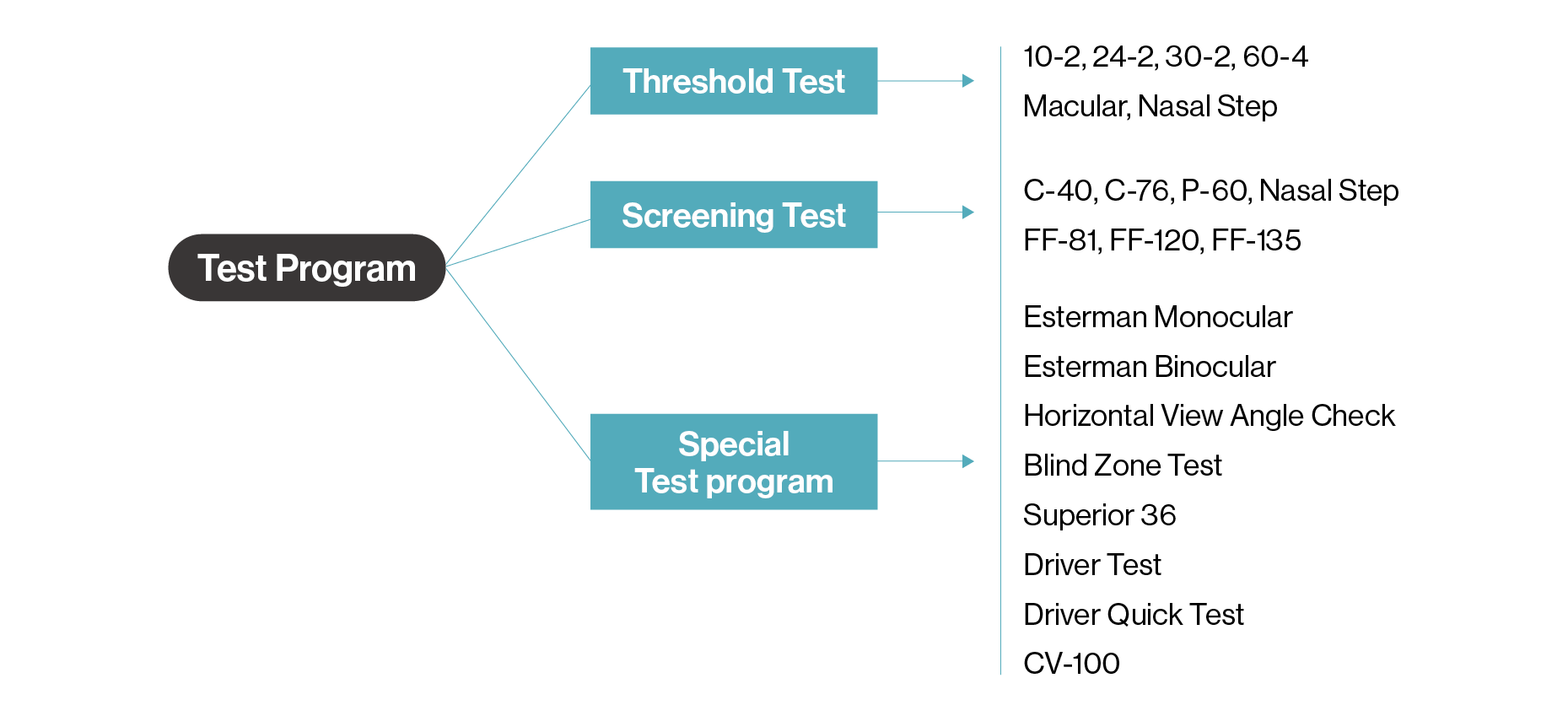
- Includes various test programs for accurate assessment
- Convenient measurement
MENU
Explore Details
Precise measurement
The HVS-100, which fully complies with Goldmann standards, precisely measures the range within which a patient can detect stimulation. It evaluates the visual field using various sizes and intensities, reflected against the combination of white and black in the background, measuring visual sensitivity and range.


Includes various test programs for accurate assessment
The Blind Zone Test, Horizontal View Angle Check, and test programs for neurological eye diseases are included, utilize them for diagnosing and monitoring conditions such as optic nerve disorders, glaucoma, visual impairments, and retinal diseases.
Convenient measurement
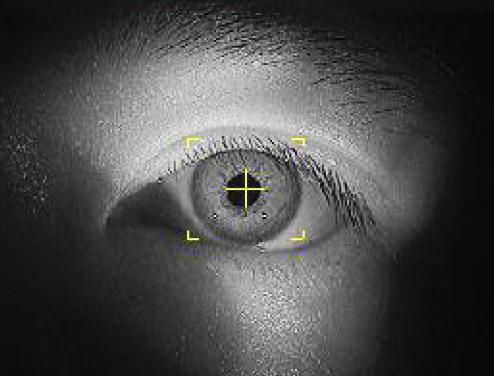
The system automatically recognizes OD/OS and alerts the operator to help prevent mistakes during the examination. Additionally, it automatically measures pupil diameter during the test to correct visual errors and provides voice guidance on how to perform the test, making the measurement process convenient.
Huvitz MEMBERS
If you want more ophthalmology & optometry content
join Huvitz Members
Specifications
1. Technical Specifications
DB Value Range displayed
0-40db
Stimulus Intensity Range
1asb-10000asb
Stimulus Size
Goldman III
Stimulus Color
White
Stimulus Duration Time
200ms/Adaptive
Max Measurement Range
90°
Test Distance
30cm
Test Mode
Static
Stimulus Quantity
456 points
Stimulus Plane
Aspherical surface
Background Illumination
White 31.5asb (10cd/m2)
Customize Test Program
-
Auto Eye Recognition
-
Blind Zone Range Test
-
Stimulus Source
LED
2. Hardware Specification
Chinrest Control
Touch Screen, Keyboard and Mouse Control, Button Control
Head Movement
Chinrest and Forehead-rest move simultaneously
PC Configuration
CPU 1.6GHz, RAM: 4GB
Hard Disk 120GB
Operation System: Windows 10
LCD: 14" Capacitive Touch Screen
Networking: Ethernet & WiFi
Dimensions
480mm(L)×430mm(W)×528mm(H), 14kg
Others
Input Voltage: a.c.100~240V, 50/60 Hz
* Specification and design are subject to change without notice.
Related Products
HS Series
Slit Lamp
HNT-1/1P
Non-contact Tonometer
HFC-1
Non-Mydriatic Fundus Camera
HTR-1A
Auto Ref/Keratometer, Non-contact Tono/Pachymeter
HTG-1
Full Corneal Optical Topographer
HIIS-1
Huvitz Integrated Data Management System
HBM-1
Optical Biometer with Full Corneal Topography System
HOCT-1/1F
Optical Coherence Tomography
FAQ
Q. For which conditions can the HVF-100 be used in diagnosis and monitoring?
A. The HVF-100 provides blind spot testing, horizontal visual field evaluation, and neuro-ophthalmic evaluation programs, and is used for the diagnosis and follow-up of various ocular diseases, including glaucoma, optic nerve disorders, visual field abnormalities, and retinal diseases.
Q. How convenient is the HVF-100 to use during examinations?
A. The HVF-100 is designed to minimize examiner errors through features such as automatic OD/OS recognition, operator alerts, and automatic pupil-size measurement. Additionally, its voice-guidance function helps patients follow the test procedure easily, making the overall examination smoother and more efficient.
Q. What are the main features of the HVF-100?
A. The HVF-100 offers a wide range of visual field examination programs, including blind-spot analysis, horizontal visual-field evaluation, and neurological assessments, supporting the diagnosis and monitoring of glaucoma, optic nerve disorders, and retinal diseases. Its user-friendly features, such as automatic OD/OS recognition, automatic pupil-size measurement, and voice guidance, help reduce testing errors and enhance ease of use.
Q. How does the HVF-100 detect fixation loss during an examination?
A. The HVF-100 detects eye and head movements in real time using a multi-layer fixation monitoring system, including the Heijl–Krakau blind spot monitor, video-based eye monitoring, gaze tracking, and head tracking. When fixation loss is detected, the system provides alerts to help maintain test reliability.
Q. How does the HVF-100 manage fixation stability during an examination?
A. Visual field test results can vary significantly depending on the patient’s concentration and fixation stability. The HVF-100’s fixation monitoring function minimizes examination errors through automatic eye position calibration and continuous gaze tracking, ensuring more objective and reproducible test results.