
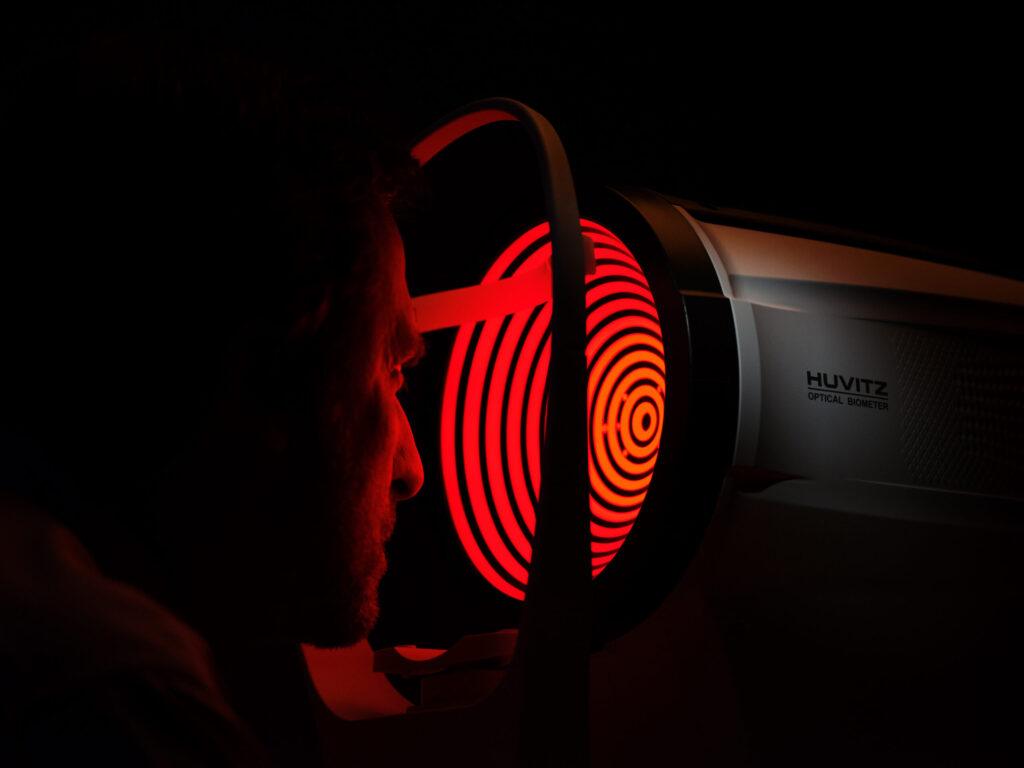


Why Does Dry Eye Syndrome Occur, and How Should We Manage It?
Do your eyes ever feel stiff and gritty, as if tiny grains of sand are rolling around, or do they quickly become tired when you look at a screen for a long time? If you’ve been brushing it off as “my eyes must just be dry,” it may actually be the beginning of dry eye syndrome.
A recently published study, Clinical Assessment and Management of Dry Eye Disease (2025), describes dry eye syndrome as a complex condition in which the homeostasis of the tear film is disrupted, inflammation recurs, and, in more severe cases, even neural function is affected. In other words, it is not just simple dryness, but a chronic ocular disease.
In this article, we will walk through the findings of that study step by step, from the causes and diagnosis of dry eye syndrome to its treatment and long-term management strategies.
Why does dry eye syndrome occur?
Dry eye syndrome develops when the eyes do not produce enough tears, when the tears evaporate too quickly, or when both mechanisms occur together. According to recent research, dry eye syndrome arises from a complex interplay of extrinsic and intrinsic factors.

<Extrinsic factors>
– Dry environments caused by air conditioning or heating
– Prolonged use of computers and smartphones
– Contact lens wear
– Air pollution and smoking
– Ocular changes after cataract or refractive surgery

<Intrinsic factors>
– Aging
– Hormonal changes
– Autoimmune diseases (such as Sjögren’s syndrome or rheumatoid arthritis)
– Meibomian gland dysfunction (MGD)
– Neuropathic pain caused by nerve damage
When the osmolarity of the tear film increases, inflammation repeatedly occurs on the ocular surface, and this inflammation further destabilizes the tear film, initiating a vicious cycle. Once it reaches this stage, dry eye syndrome becomes a condition that requires appropriate diagnostic evaluation and early treatment.
How is dry eye syndrome diagnosed?
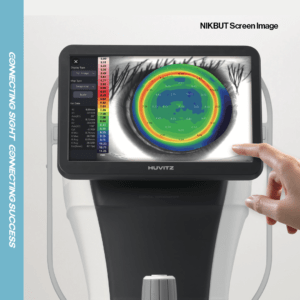
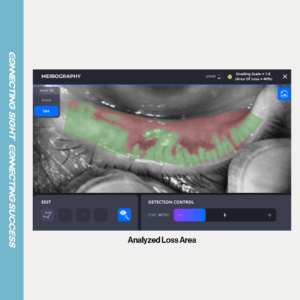
We commonly undergo several traditional tests for dry eye syndrome, such as:
– Schirmer test (measuring tear volume)
– TBUT (tear film breakup time)
– Fluorescein staining
However, these tests can be invasive, and their results may vary from one examination to another. For this reason, non-invasive and high-resolution diagnostic technologies have gained increasing attention in recent years.
<Modern diagnostic techniques for dry eye syndrome>
– NIBUT (noninvasive tear film breakup time)
– TMH (tear meniscus height)
– Meibography (imaging of the meibomian glands)
– Conjunctival redness assessment
– VCM (in vivo observation of corneal and conjunctival microstructures)
– Tear film biomarkers (such as MMP-9) for detecting early inflammation
These advanced technologies allow for a more accurate assessment of tear film status and ocular surface inflammation, helping clinicians develop more personalized treatment plans for each patient.
Where should treatment for dry eye syndrome begin?

The study proposes a four-step approach to the treatment of dry eye syndrome.
STEP 1.
: Lifestyle management & patient education
A key factor in successful treatment is helping patients clearly understand that dry eye syndrome is a chronic condition. Although these measures may seem simple, even small adjustments in daily habits can significantly reduce ocular discomfort.
– Reduce screen time
– Improve ventilation and maintain proper humidity
– Avoid smoking
– Keep the eyelids clean
– Consider omega-3 supplementation
STEP 2.
: Basic treatment: artificial tears & eyelid care
– Preservative-free artificial tears
– Lipid-supplemented artificial tears
– Warm compresses and eyelid massage
Lipid-supplemented artificial tears are particularly beneficial for patients with meibomian gland dysfunction.
STEP 3.
: Anti-inflammatory treatment: the key step to breaking the cycle
Dry eye syndrome follows a continuous inflammatory loop—tear film instability → inflammation → tissue damage → further tear film deterioration. Therefore, controlling inflammation is not optional; it is an essential part of treatment.
– Topical steroids
– Cyclosporine A
– Tacrolimus
– Tetracycline-class antibiotics
– NAAGA (N-acetyl aspartyl glutamic acid)
STEP 4.
: Severe dry eye syndrome: long-term and intensive management
– Punctal plug insertion
– Autologous serum eye drops
– Protective scleral lenses
– Continuous monitoring by clinicians
In severe cases, combined and long-term treatment strategies are more effective than any single therapy alone.
Dry eye syndrome can improve with proper management
Dry eye syndrome is not “just dryness,” but a complex chronic disease in which tear film homeostasis is disrupted and inflammation occurs repeatedly. However, with early diagnosis and personalized management based on the underlying causes, symptoms can improve significantly. Identifying the cause comes first, precise diagnostic evaluation is essential, lifestyle adjustments and inflammation control are key, and multidisciplinary care can be important when needed. Don’t ignore the small signals your eyes may be sending. If discomfort persists, be sure to consult a specialist. With the right approach, dry eye syndrome can absolutely get better.
📄 Reference
– Clinical assessment and management of dry eye disease
– Authors : Jeong H., Kim J.
– Publication : Clinical and Experimental Ophthalmology (2025), Springer Nature